
Improving Trailer Tarp Longevity with Heavy-Duty Spiral Torsion Springs
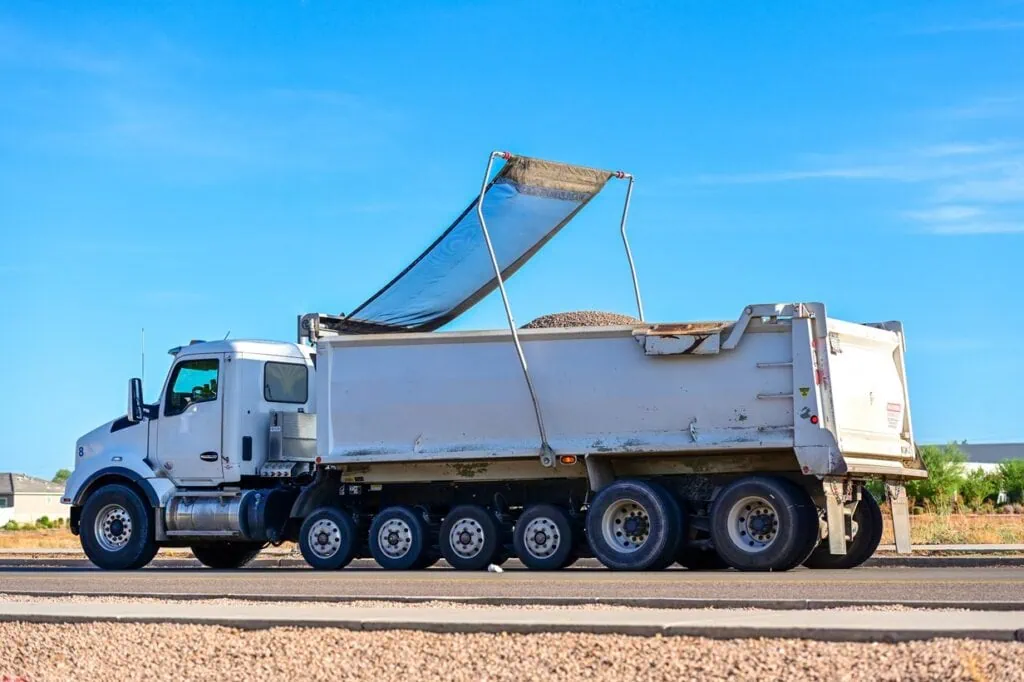
Fleet operators depend on resilient hardware to transport loads safely over long distances. Spiral torsion springs are used to support the reliable deployment of trailer tarps with controlled movement. These tarp springs have a concentric spiral shape and feature durable material to deliver the necessary torque and longevity in heavy-duty applications. Learn more about torque requirements for truck and trailer tarp springs, weatherproofing, and custom manufacturing.
Determining Torque Requirements for Commercial Tarp Systems
Correct spring sizing determines whether a retraction system performs for its full service life or fails in the field. A spring specified with too little force produces slow or incomplete retraction, leaving cargo exposed during severe weather. A spring specified with too much force transfers excess load into the surrounding aluminum housing, stressing mounting points and accelerating wear. Engineers evaluate retraction speed requirements, cycle life targets, and housing load limits together, so the specified mechanism delivers reliable performance across the demands of commercial vehicle applications.
Mechanical designers can determine specific torque requirements for a given system by measuring the mass of the fabric cover and finding the required pull force needed to effectively spool the material. Wider or heavier tarps generally will require higher torque to retract smoothly.
Weatherproofing: Protecting Trucking Springs from Road Salt and Debris
Commercial fleets face exposure to various environmental hazards. Heavy highway driving can subject truck springs to corrosive road salt, chemical deicers, and changing moisture. Standard commercial alloys may degrade faster under these conditions, which can impact deployment or retraction or result in mechanical snapping on the highway.
Protecting tarp springs involves using specific weather-resistant metals designed for outdoor transportation. Robust mechanical components can be manufactured in strong materials to protect from harsh debris or conditions:
- Stainless steel. This alloy can resist severe corrosion and maintain elasticity during extreme thermal cycles.
- Carbon steel. This provides high elasticity and fatigue life in heavy-duty trucking applications.
- Specialty alloys. Technicians can use high-tensile alloys for more compact spaces or other constraints.
Selecting a substrate for the vehicle and anticipated operating conditions can slow replacement cycles and support reliable performance requirements. In certain applications, finishes can prevent rust in harsh environments and support smooth performance.
Our Spiral Torsion Springs for Trucking Tarp Systems
At John Evans’ Sons, we have manufactured springs in America since 1850, and that experience shows in how we approach heavy-duty tarp systems. Our spiral torsion springs deliver the torque these applications demand, engineered to match the specific load requirements of each cover system rather than forced into a one-size-fits-all catalog part.
Tarp system housings leave little room to work with. Our engineering team designs custom mechanisms around tight spatial constraints, with a range of mounting options to fit different housing configurations. Precise dimensional tolerances, held consistently across production runs, prevent mechanical binding during rapid cover deployment, when a spring that drags or hangs is the difference between a covered load and an exposed one. Before any design reaches full production, our prototyping services validate spring performance under real-world conditions, so the part that ships is the part that was proven.
Extend the Service Life of Your Trailer Tarp System with Our Spiral Torsion Springs
Commercial fleets rely on durability and mechanical precision in spiral torsion springs to protect valuable cargo on the road. John Evans’ Sons delivers truck springs and heavy-duty trailer tarp springs for dependable daily deployment. Our spiral torsion springs provide torque to support reliability, and our experience allows us to help meet unique needs for heavy-duty applications.
Partner with our technical team to review your spiral torsion spring and tarp system requirements. Contact us or request a quote to start your project.